Research Projects
There is a pressing challenge to achieve a zero-carbon future in the next 20 years, which requires not only technology engineering, but also new science and materials for improving the performance and sustainability of our energy solutions.
Our focus is to design and develop novel functional materials including organic semiconductors and low-dimensional inorganic semiconductors (e.g. transition metal dichalcogenides (TMDs)). We will also exploit these materials for achieving sustainable and efficient optoelectronics (solar cells, photodetectors, LEDs, etc.) to help address these challenges.
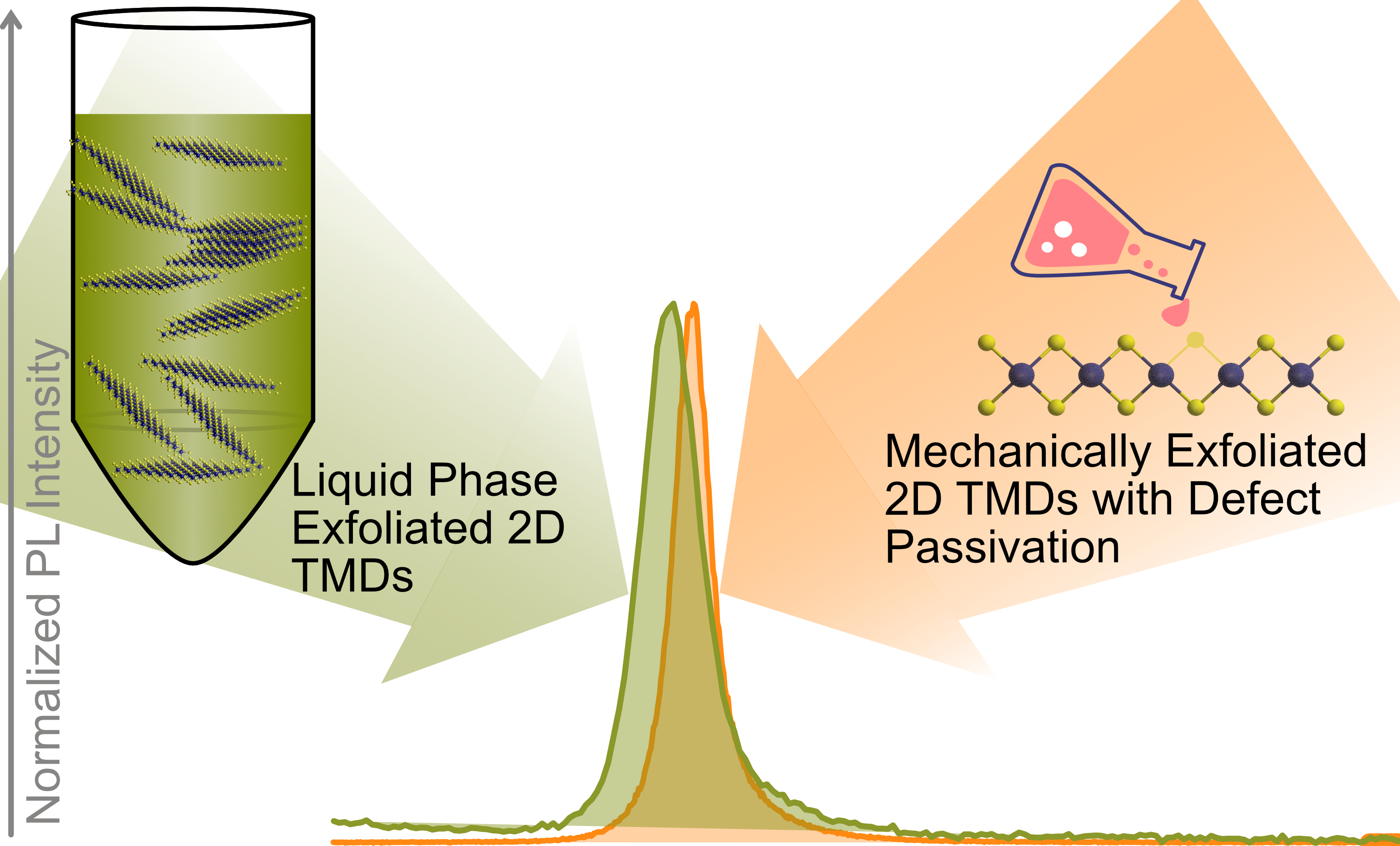
Defect Passivation of 2D TMDs
In this project, we are developing eco-friendly chemical treatments to passivate the defects of 2D transition metal dichalcogenides (TMDs) and investigate the effect with photoluminescence and Raman spectroscopy, as well as charge transport measurements. We are also developing the mechanistic picture for the defect passivation with X-ray spectroscopy.
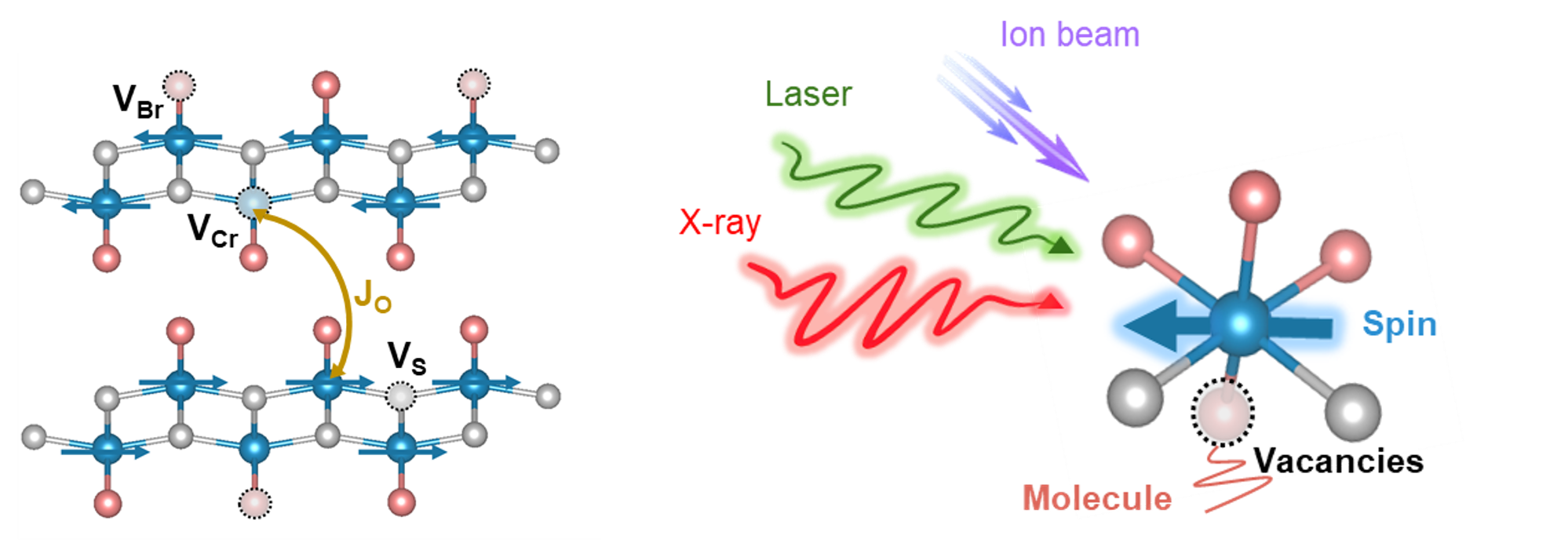
Defect Physics in 2D Magnetic Semiconductors
In this project, we investigate the defect physics of low-dimensional 2D magnetic semiconductors to regulate their long-term stability. We focus on how surface defects and chemical processes influence degradation pathways. By combining advanced optical, electronic, and magnetic characterization techniques with large-scale research facilities, we aim to establish the fundamental mechanisms governing material degradation and develop defect passivation strategies for reliable, sustainable integration of 2D magnetic semiconductors in future spin-based technologies.
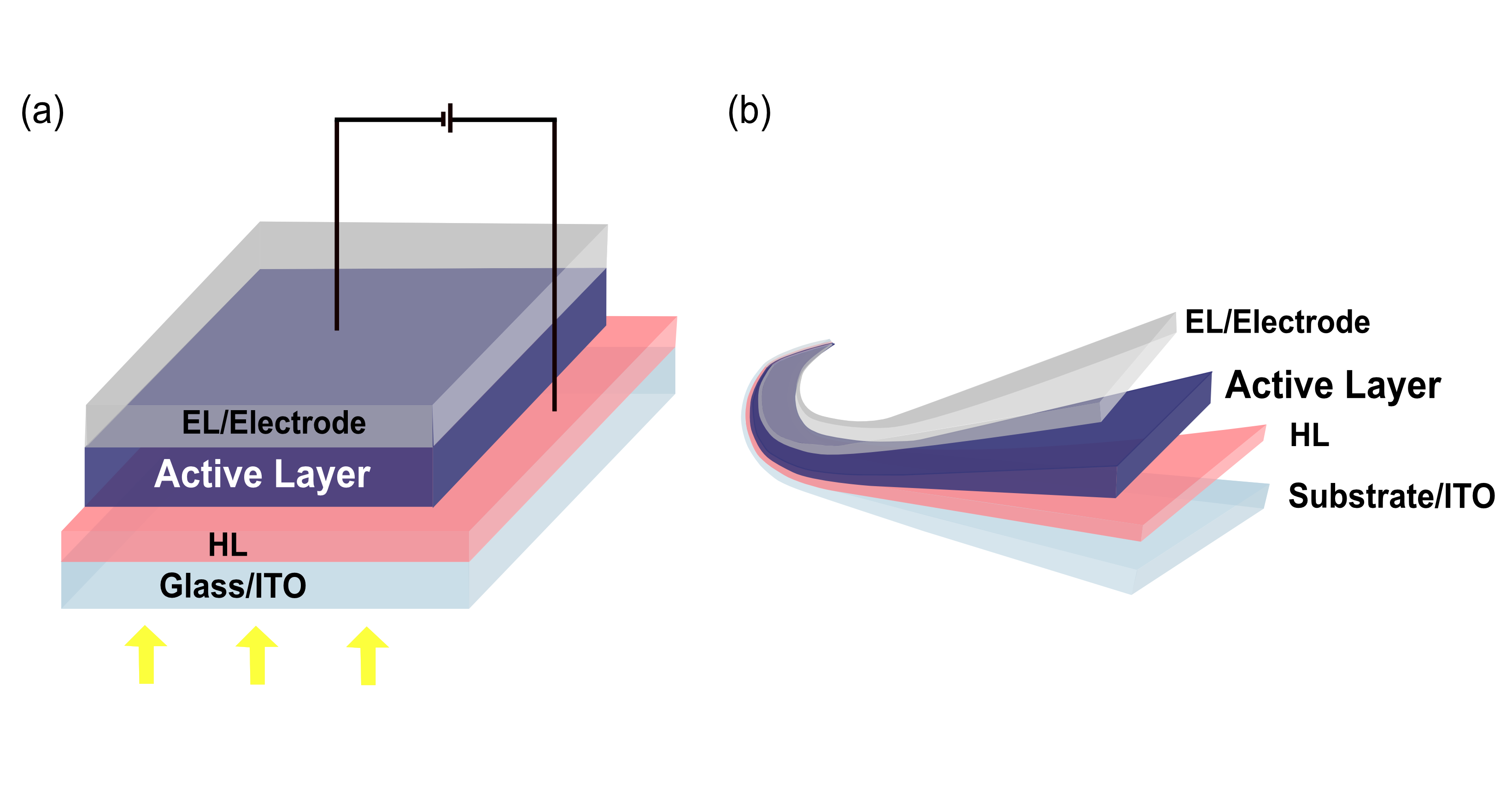
Developing 2D TMDs for Sustainable LEDs
In this project, we are developing sustainable high-brightness 2D TMD nanosheets and fabricating efficient LEDs with a “green” fabrication process. We exploit the photophysical properties of these materials and the charge dynamics of the devices and study them with ultrafast optical spectroscopies. In addition, we investigate the morphology with Resonant Soft X-ray Scattering (RSoXs) and Grazing-Incidence Wide-Angle X-ray Scattering (GIWAXS) to understand the device performance.
Funding
Research is funded through FORMAS, The Swedish Research Council, The ÅForsk Foundation, Göran Gustafssons Stiftelse, Bertil & Britt Svenssons Stiftelse för Belysningsteknik.